
How inward rotation works
The inward rotation of the left arm often goes unnoticed – especially when starting to position the fingers in the 1st position, and particularly when the fourth finger is initially left out. If you have a particularly long fourth finger, this can often compensate for the lack of inward rotation – up to the third position. After that, it’s on many situations game over: you’ll need to some "readjust" the technique and posture.
With this article, we do not want to tar everyone with the same brush. We simply want to draw attention to two things:
- There is the possibility in of inward rotation which is relatively easy to do so.
- There is a risk of confusing this with a “right-angled elbow”.
There are always exceptions, and in this case, these are mostly players with very long arms, fingers and large hands.
- An article by Angelika S. Schepke and Erdmute Maria Hohage -

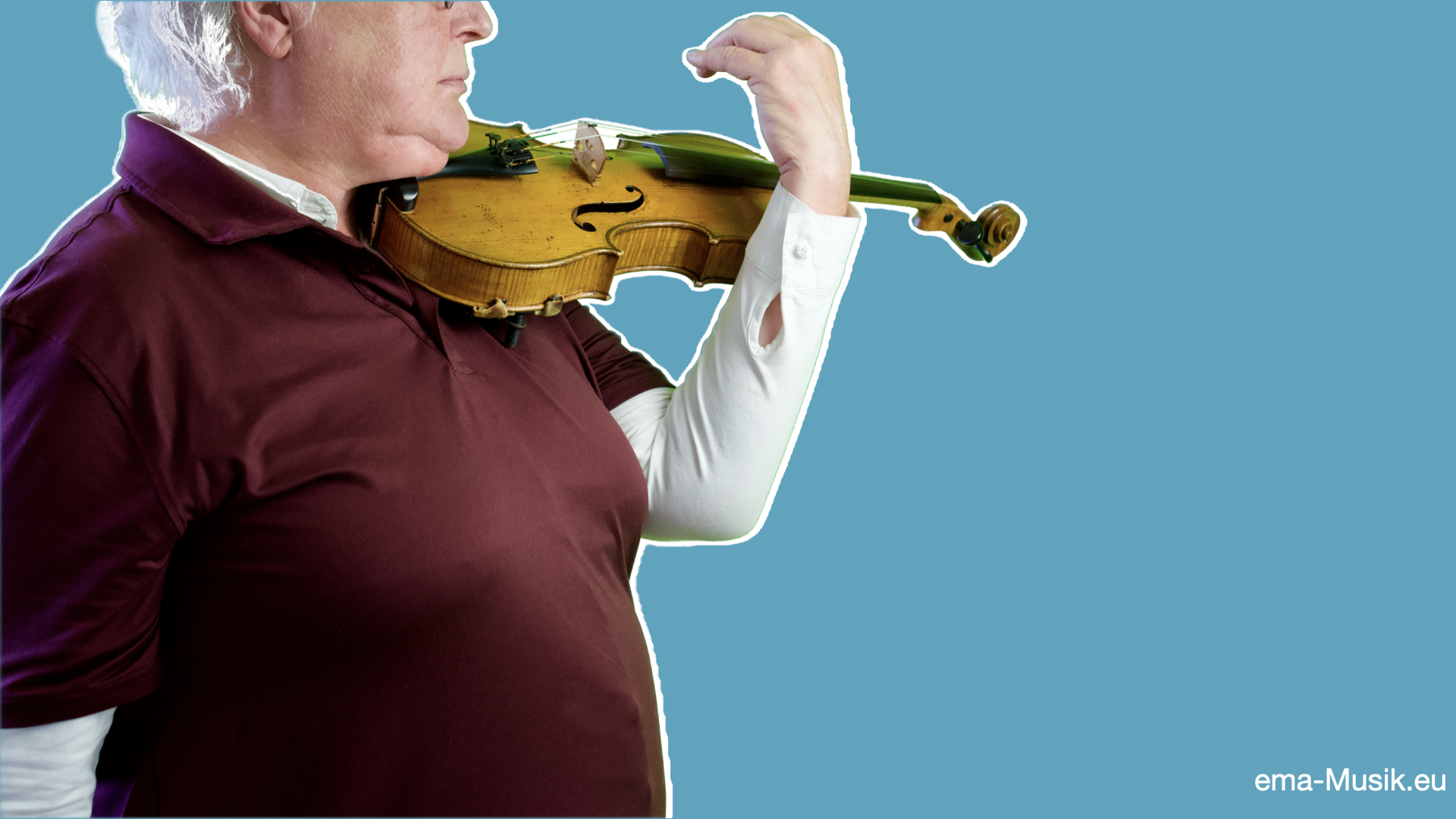

The answer to the question of why a lack of inward rotation often goes unnoticed is actually almost banal: it is not necessarily obvious. This is particularly the case when, at the beginning of playing in 1st position, the 4th finger is left out or does not play a significant role.
A particularly long 4th finger combined with a long arm can compensate for this very well. However, if the student does not also have a particularly large hand, it becomes apparent when playing in 3rd position or when moving higher.
From that point onwards, playing on the lower strings - and, depending on the individual’s physiology, also on the higher strings - becomes more difficult, sometimes impossible, and in some cases only possible through painful compromises.
The inward rotation does not necessarily mean that the arm should be pulled as far to the right as possible. In Principle of Violin Playing and Teaching Galamian draws attention to that:
"The older schools of violin playing required every student to pull the elbow far to the right. Players with long arms and fingers, who followed that rule, found that their fingers assumed an awkward curve an leaned too heavily toward the G-string side of the fingerboard. The wrong side of the finger tip contacted the string and more often the nail instead of the flashy part formed the point of contact. The immediate consequence was the development of a severe type of handicap in all kinds of finger motion and especially in the vibrato. This illustration alone is sufficient to discredit the rule as such that the elbow "should always be placed as much to the right as possible". (p. 13)
The “rotation” of the left arm referred to here differs from the “bending” to the right described above. In summary, the difference is as follows:
- Bending: The fingers are first placed on the fingerboard, and then the elbow is pulled towards the right.
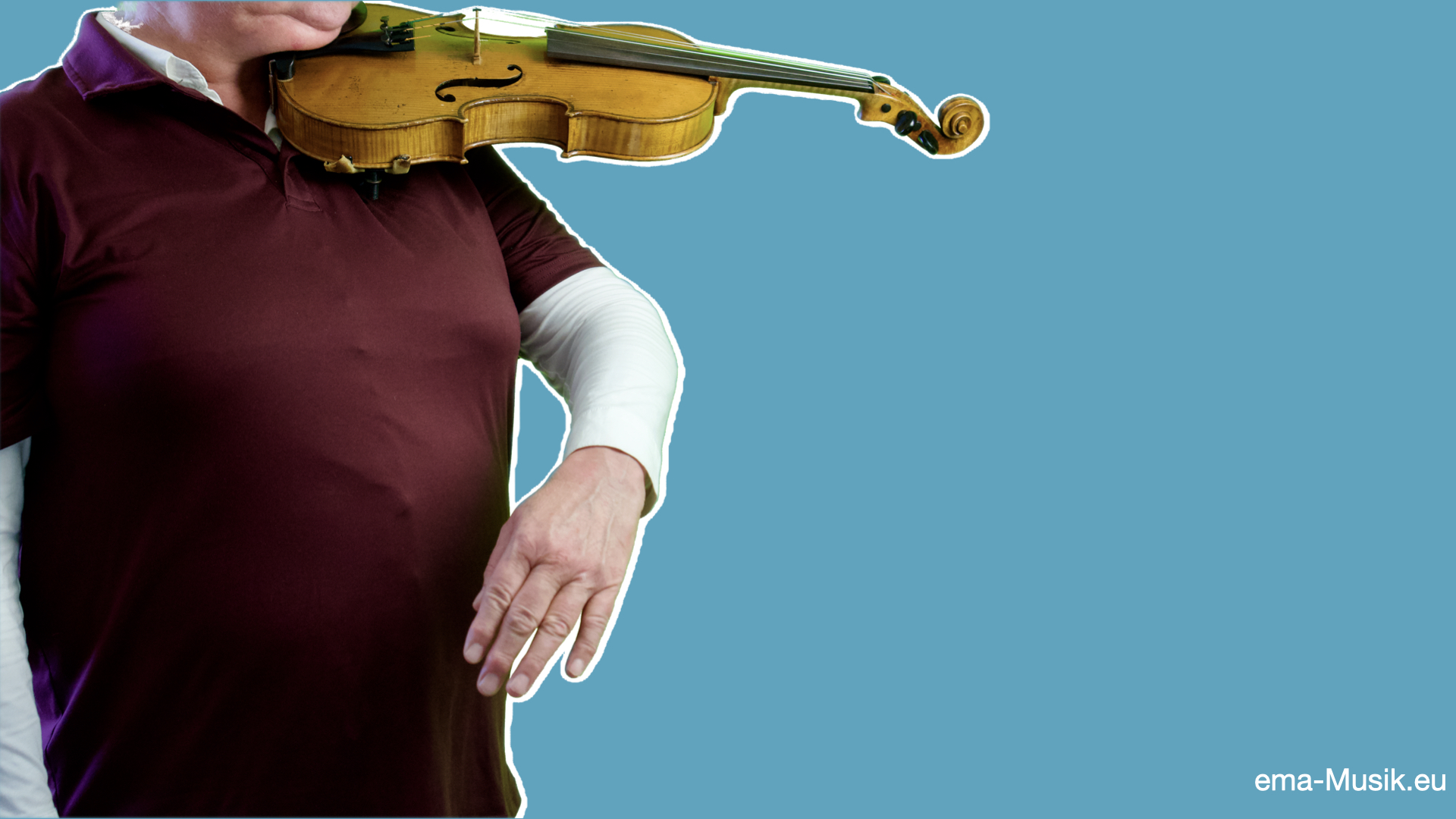
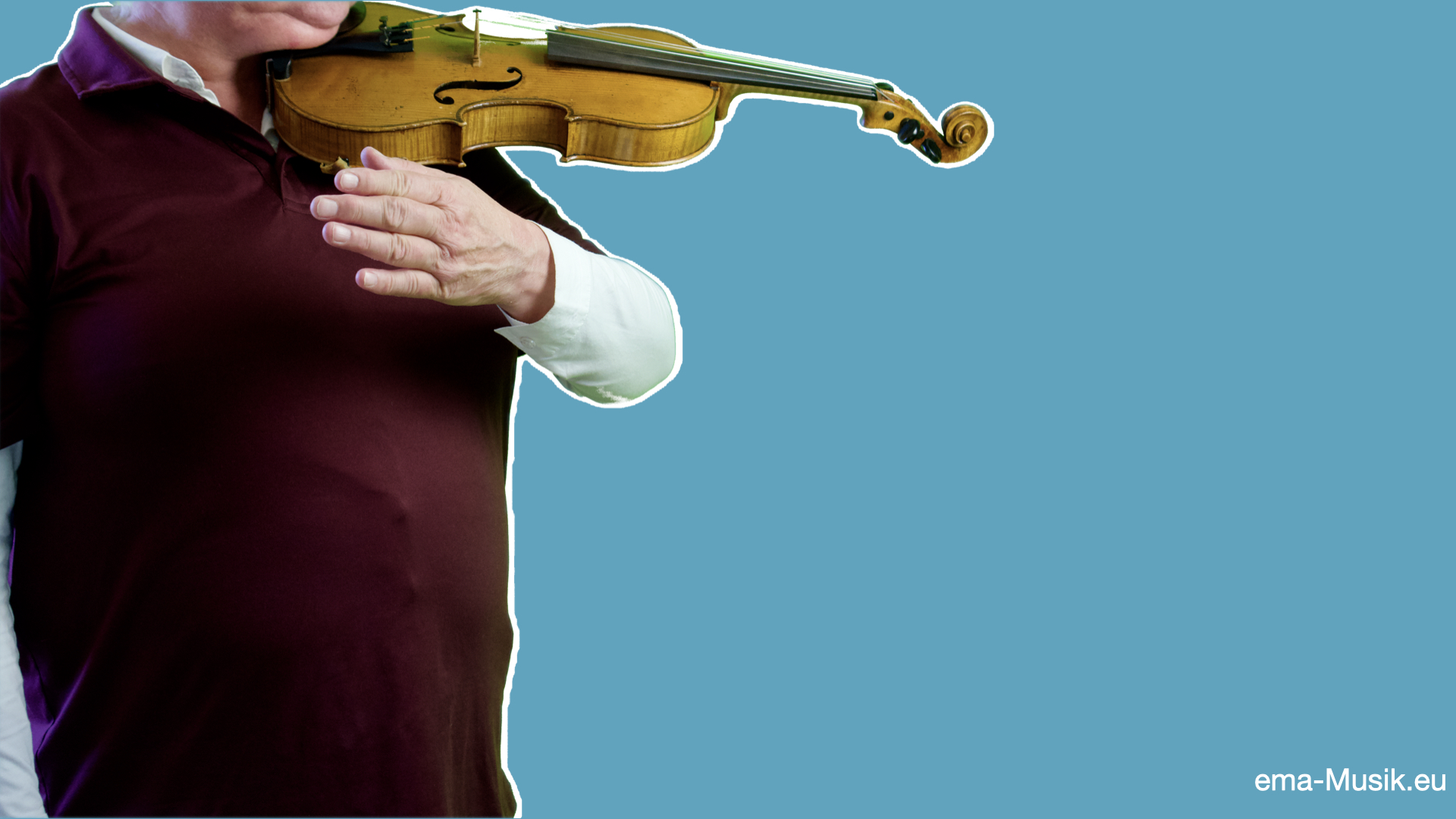
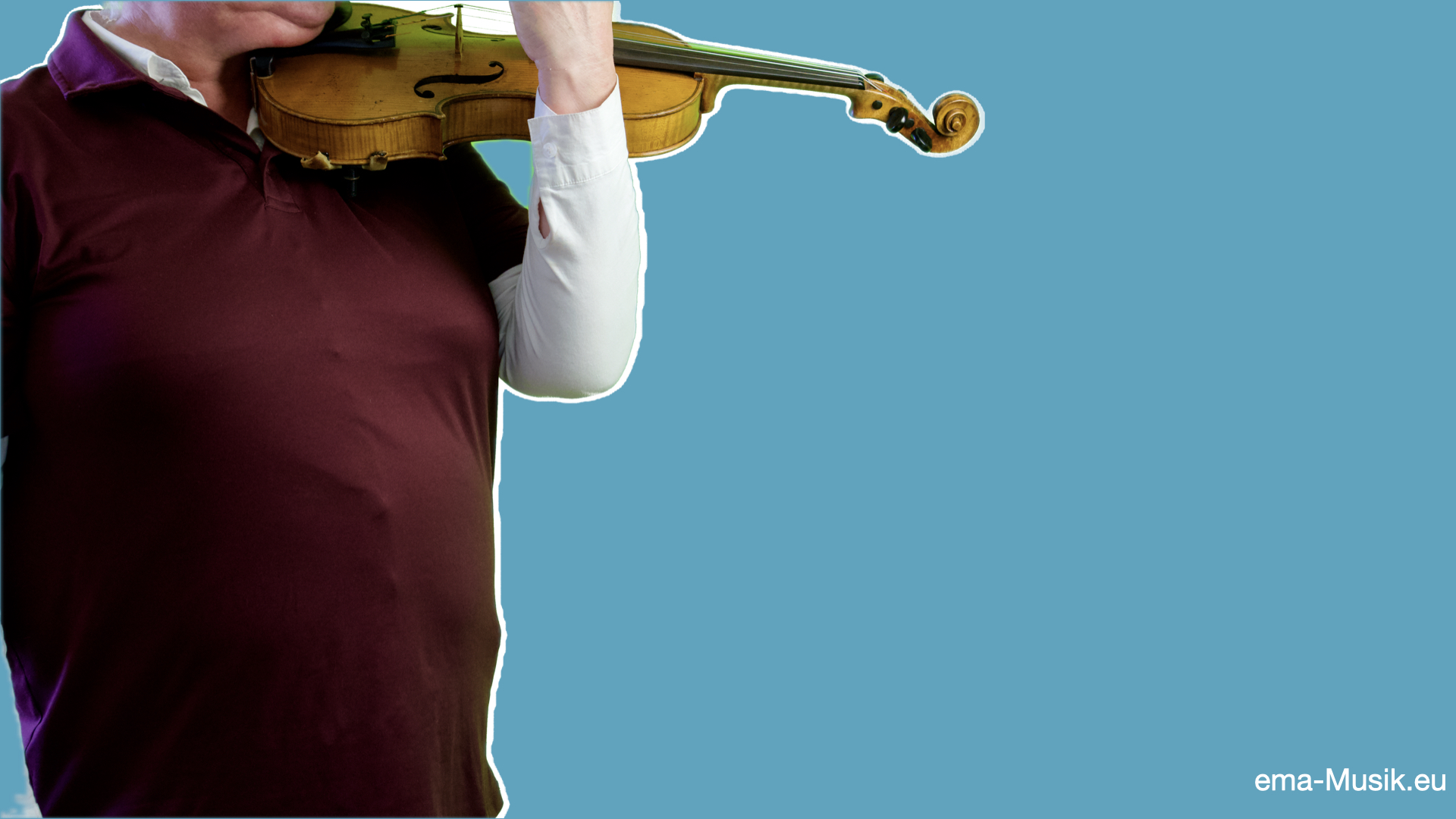
- Rotation: The arm is first rotated inward, close to the body, and then the fingers are placed on the fingerboard.
In summary, we can say:
- The shorter the fingers and arms, the further to the right the elbow should be positioned - but only after the arm has been rotated inward.
- If the arm is rotated inward first, there is greater freedom of movement to bring the elbow into the appropriate position. In fact, it should never really remain completely still.
The correct position depends largely on the fingers. Here again, let us hear what Galamian has to say:
"They have to be placed in such a way, as to allow them the most favourable conditions for their various actions. Once this is done, everything else - thumb, hand, arm - will subsequently find its corresponding natural position." (p. 14)
In the images above and in the accompanying video, we demonstrate the movement involved. The inward rotation is easiest to understand when it is required from the very beginning - for example:
- when playing starts directly in 4th position, or
- when the 4th finger plays an important role in 1st position.
The degree of inward rotation can be adjusted by the player, for example by experimenting with the distance between the arm and the body. For anatomical and physiological reasons, it may be helpful to lean slightly forward while rotating the arm inward. This increases the distance between the arm and the body and allows the rotation to be adapted to the individual’s physical characteristics.
We would also like to point out that, in many cases, the entire setup of the shoulder rest, chin rest and the point of contact on the collarbone may need to be adjusted accordingly.
For those who are retraining their technique and want to realign their posture and playing technique: It is also worth trying inward rotation for those who are retraining, as well as for anyone who has difficulties in higher positions or with the reach of the 4th finger.
And one final conclusion: As our bodies develop and change over the years, so does the degree of inward rotation.
With that in mind, we wish you happy experimenting!